

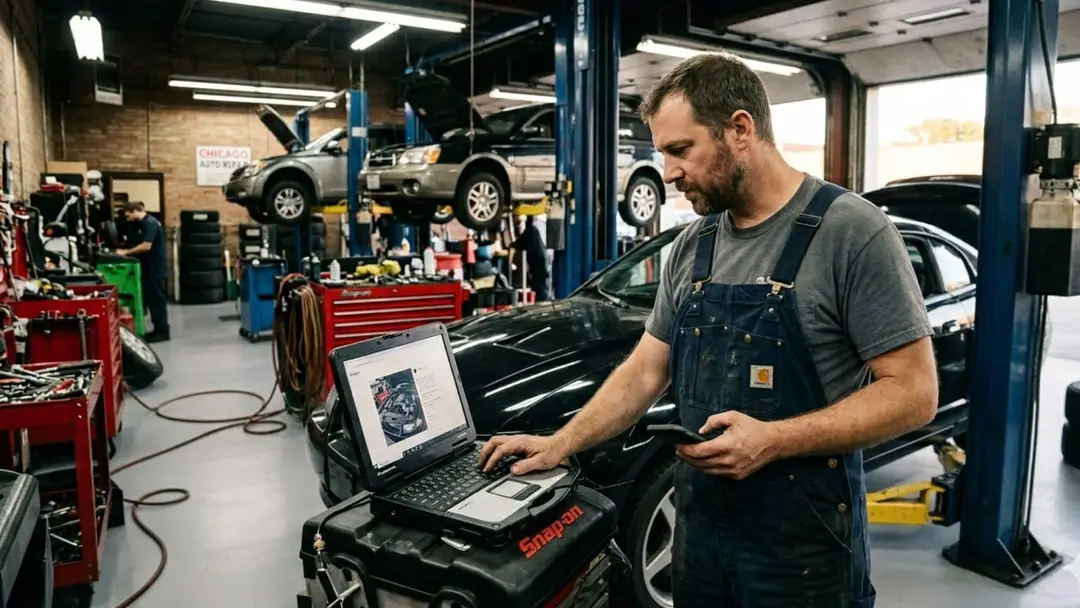
An auto shop owners's playbook for how they should be posting without guessing what to post and whether any of it works.
A shop owner sits in his office at 7:14 on a Wednesday night. The bay is closed, the techs are gone, and his phone is open to Instagram.
He has been scrolling for twenty minutes trying to decide what to post. He finally takes a photo of a wheel hub he replaced earlier, types out a caption, deletes it, types it again, posts something that feels lame, and closes the app.
The post gets four likes. Three are from his wife, his sister, and a parts vendor in another state. He tells himself social media is a waste of time and goes home.
Here is the part he is missing. The next morning, three different drivers in his city are sitting at red lights, deciding which shop to call for a brake job.
Each one types his shop name into Instagram or Facebook to see if the place is real. Two of them find a profile that looks abandoned, the last post is from August, the photos are stock images of generic mechanics, and they close the tab.
They call the chain down the street instead. He never sees the leak. He just sees a slow week and blames the economy.
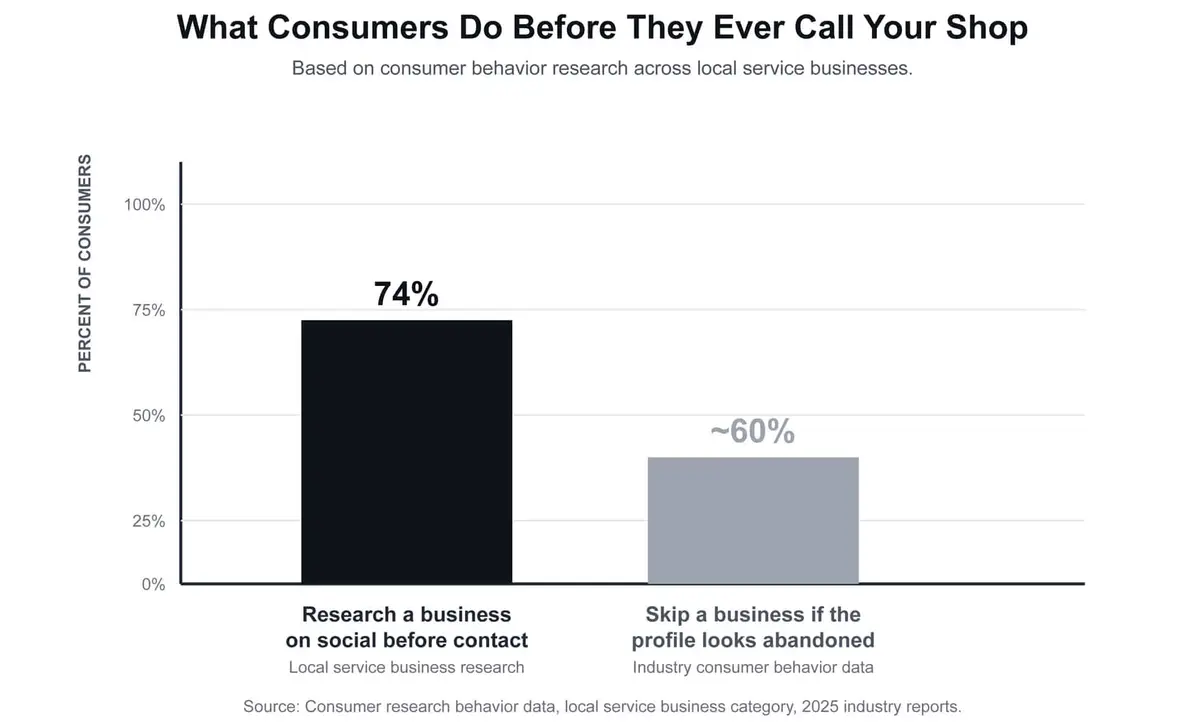
Industry research is blunt about this. Roughly 74 percent of consumers research a local service business on social media before contacting them. An inactive or sloppy profile is not neutral. It is a negative signal, the same way a dirty waiting room and a hand-written "open" sign in the window send a negative signal. The leak is not that he is not running ads. The leak is that the social profiles he already owns are quietly costing him trust every time a buyer checks.
So let's run the diagnostic differently. We are going to define what to post, how often, on which platforms, in what order, so that the time you spend on social actually compounds instead of disappearing. By the end you will have a calendar a busy shop owner can actually run, with no full-time content creator on payroll. Social sits on top of reputation, so if the review count is thin, start with how to get more Google reviews for your auto repair shop and come back to this. Running both together is what we do as social media and reputation management for auto shops.
The Real Reason Social Media Matters for an Auto Repair Shop
It is not about going viral. It is not about reaching new customers cold. It is about the buyer who already heard your name from a friend, a Google search, or a sign on the freeway, and is now checking to see if you exist.
That check is the moment. They are looking at three things, fast, on a phone screen:
Is this place real and still in business? Recent posts, recent photos, recent activity.
Do humans I would trust work here? Faces, names, the shop dog, the team in branded shirts.
Have they done work like mine before? Photos of repairs, vehicles like theirs, problems like the one they are sitting in their driveway worrying about.
If your profile answers those three questions in fifteen seconds, you stay on the call sheet. If it does not, you do not. That is the entire job of social media for an auto repair shop at this stage. Not awareness. Not lead generation. Trust confirmation at the moment of decision. Once you reframe it that way, what to post becomes obvious.
The first read: social media for your shop is not a top-of-funnel lead engine. It is a trust layer that catches the leads other channels deliver. Treat it that way and the content gets easier.
The Four Content Pillars That Actually Work
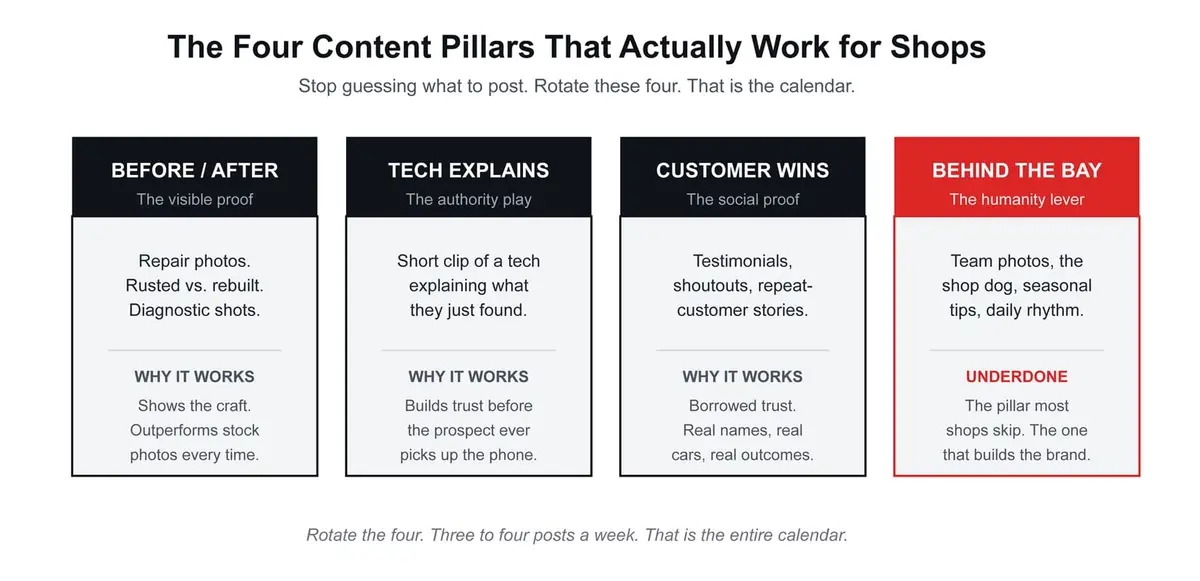
You do not need 50 content ideas. You need four pillars and a rotation. The shop owners who post consistently for a year all converge on roughly the same mix. It works because it answers the three trust questions on repeat.
1. Before and after repair photos
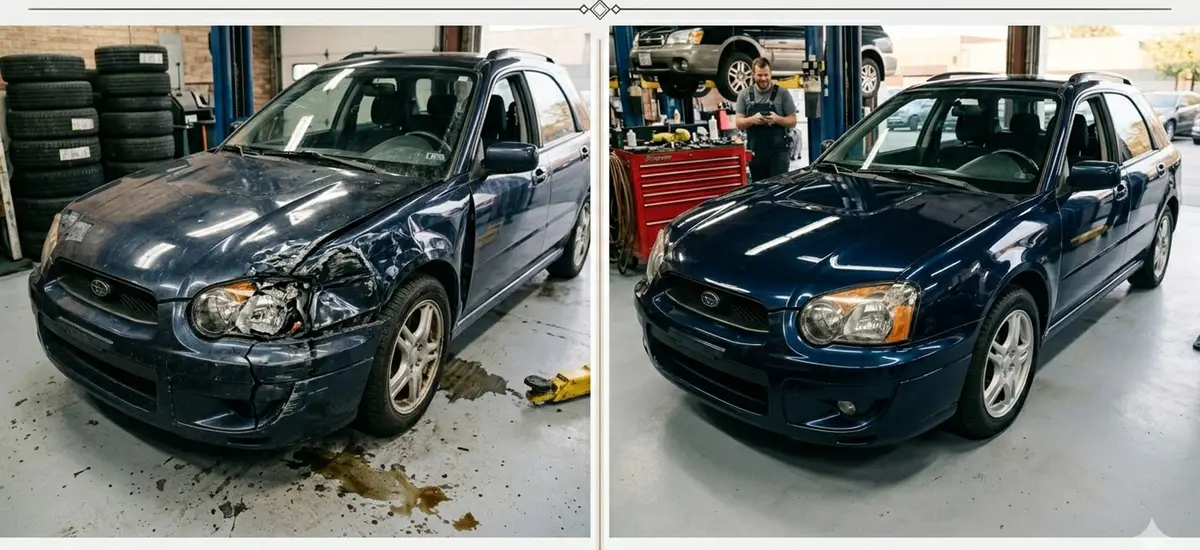
This is the highest-converting content an auto repair shop can post. A picture of a rusted, leaking water pump next to the new one installed in the same engine bay. A worn brake rotor next to the fresh one going on. A cracked CV boot next to the rebuilt axle. The work is visually obvious to anyone, even someone who has never opened a hood.
The mechanics of it:
- Phone photo, taken in the bay, in normal light. No staging. No stock background.
- One photo of the failed part, one of the fix, both from roughly the same angle.
- Caption is one to three sentences. What the customer brought it in for, what you found, what you replaced. No jargon dump.
- Tag the make and model in the caption. People search "BMW brake replacement near me," not "brake job near me."
This pillar alone, posted twice a week, fills more than half your calendar.
2. Short tech explanations on camera
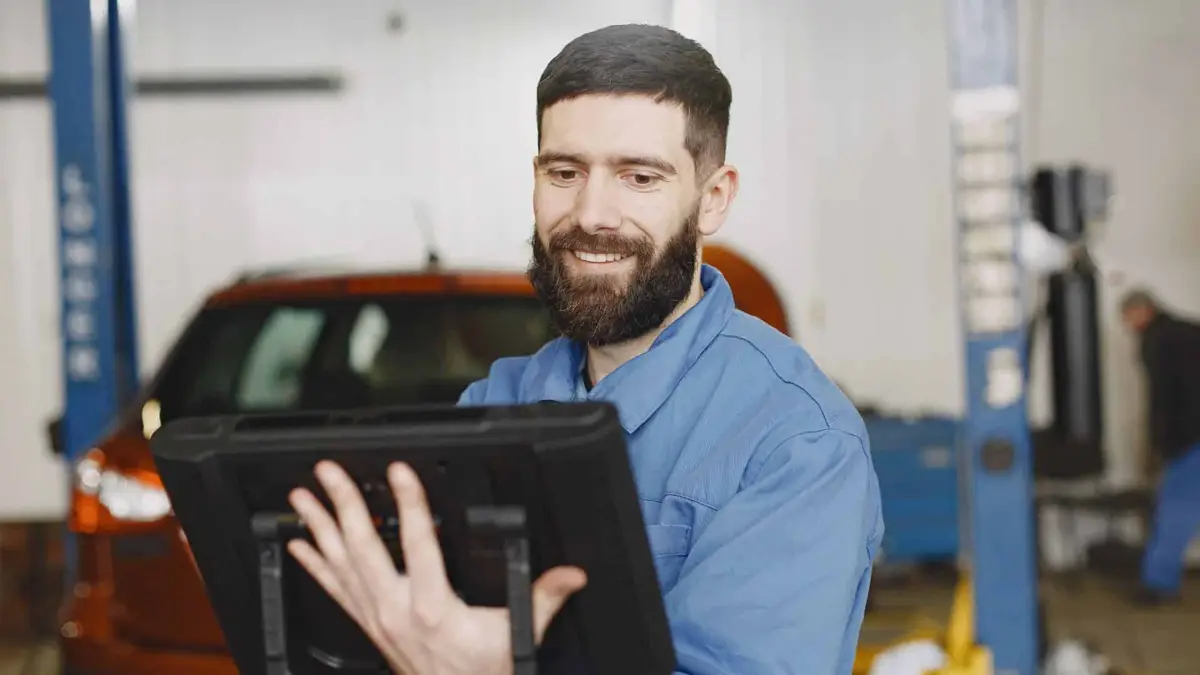
A 30 to 60 second clip of a tech holding a part and explaining what they just found. "This is a serpentine belt. This one has cracks every quarter inch. When this breaks, your alternator stops charging and your power steering goes out at the same time. That is why we caught it now." That is the entire script.
This pillar does work no other pillar can do. It puts a face on the shop. It demonstrates competence in the most credible way possible. It teaches the prospect something before they ever spend a dollar. Most shops skip this pillar because the owner thinks the tech will not want to be on camera. Half of them actually love it. Ask.
The bar is low. Vertical phone video. Natural light. Tech in shop uniform. No script memorization. One take. Done in three minutes between cars.
3. Customer wins and testimonials

Borrowed trust is the cheapest trust there is. A 20 second clip of a customer saying "I came in worried it was the transmission, they found it was a sensor, saved me four grand" is worth more than any ad you could write about yourself. The customer is doing the selling for you, and the prospect believes another driver in a way they will never believe the shop.
The mechanics:
- Ask at checkout, when the customer is happiest. "Mind if we record a quick 20 second video of your experience? Helps independent shops like us stay visible."
- Vertical phone video. One question prompt. Let them talk. Cut the dead air.
- Tag the make and model again. Reinforce the relevance signal for prospects searching that vehicle.
- Repost as static images with a pull-quote when you do not have video, especially for Google reviews you can screenshot.
This pillar takes 90 seconds at the counter and produces content you can post for a month.
4. Behind the bay and team content

This is the pillar most shops skip. It is also the one that builds the brand. A photo of the morning huddle. The shop dog asleep on the customer couch. A new tech on his first day. The team in the parking lot after closing on a Friday. Seasonal stuff. The little human moments that prove a real crew runs the shop and they like it there.
This is the humanity lever. It is what separates your shop from a corporate chain whose social feed reads like it was written by a robot. Posting one of these a week is the lowest-effort, highest-trust move in the entire calendar. Almost nobody does it consistently. The shops that do, build a local brand the chains cannot replicate.
The honest version: most shops post pillar 1 only, never get around to pillars 2 and 3, and treat pillar 4 like it does not exist. That is why their feeds feel mechanical. The fix is not more posts. The fix is rotating all four.
The Platform Priority Stack
Not every platform deserves the same effort. The shops getting real returns from social are picky about where they spend their time, and they build the stack in this order.
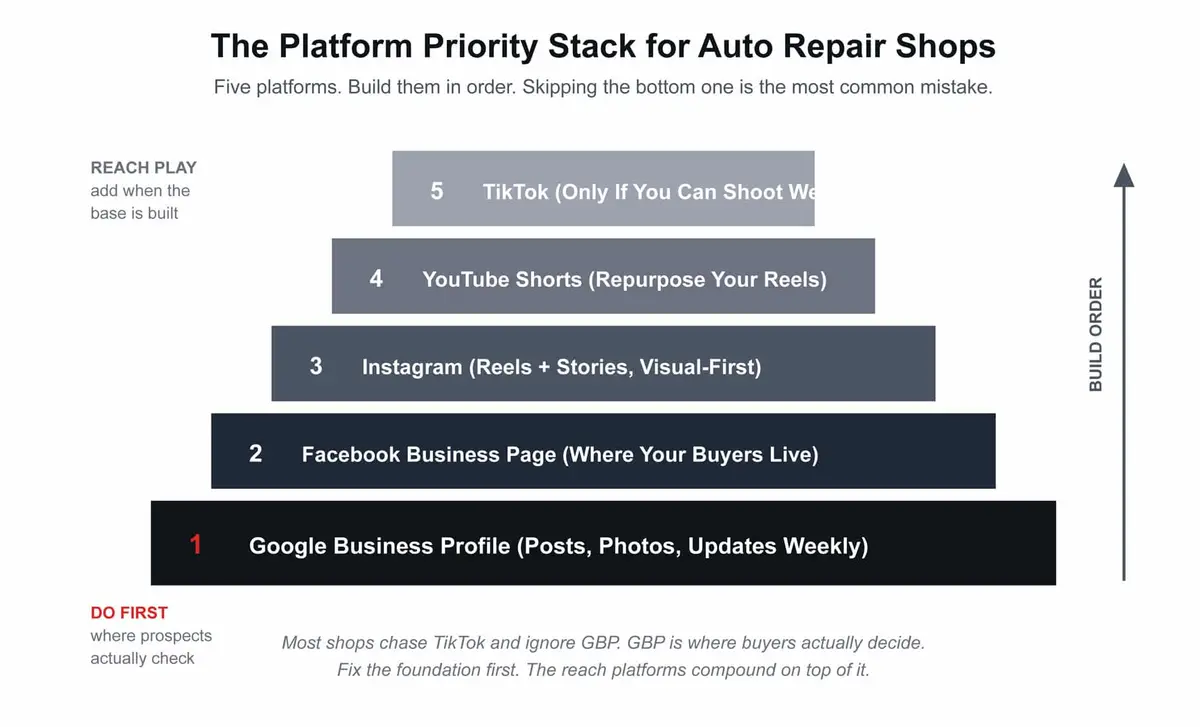
1. Google Business Profile (yes, it is a social platform now)
Most shop owners do not think of GBP as social media. Google does. The Posts feature, the Updates section, the photo gallery, the Q and A, all of it functions like a social feed pinned to the listing buyers see first when they search your shop name or "mechanic near me." A weekly GBP post is the single highest-leverage piece of social content an auto repair shop can publish, and almost no shop does it.
This is the chassis of your social presence. Build it first. Everything else amplifies it. A buyer who searches your name lands on the GBP before they land on Instagram. If the GBP is dead, the rest does not matter.
2. Facebook business page
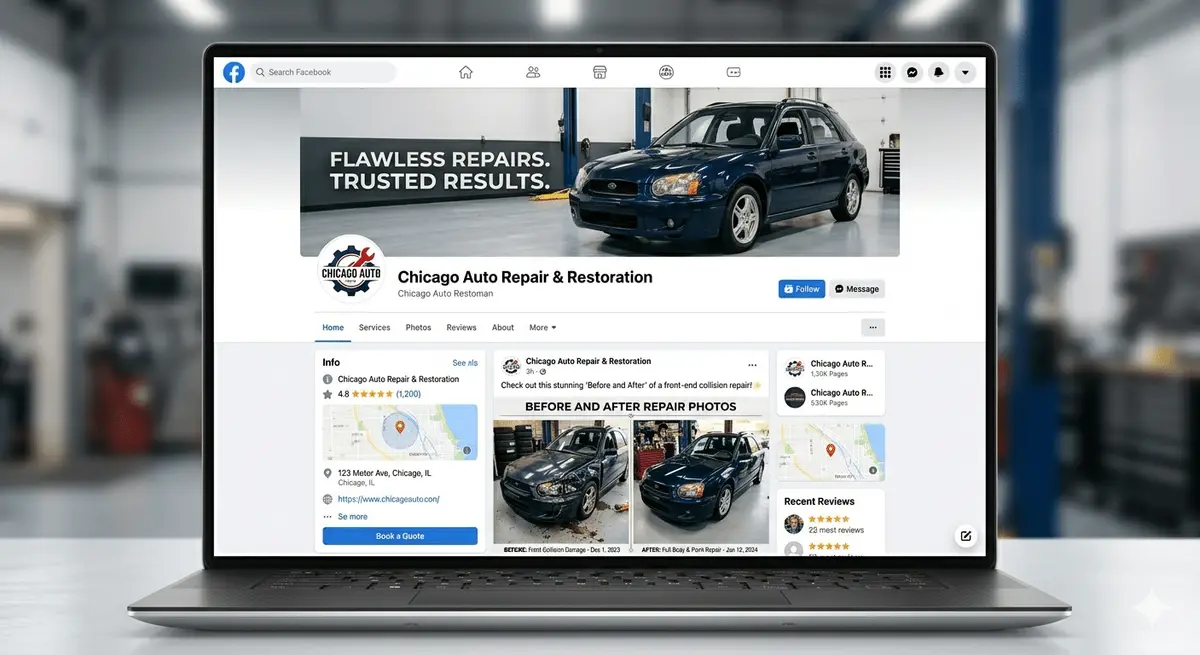
For independent auto repair shops, Facebook is where your actual buyer demographic lives. Drivers 35 to 65, the people who own the cars that need real work, are on Facebook daily. They are on Instagram sometimes. They are on TikTok rarely. Treat Facebook as the load-bearing platform. Post the four pillars there. Cross-post the visual ones to Instagram. Tag your city in every post for the local geo signal.
A Facebook business page that posts three times a week with real shop content outperforms a Facebook page that runs paid ads with stock imagery. The page is the trust layer the ad runs through.
3. Instagram (Reels and Stories first, grid second)
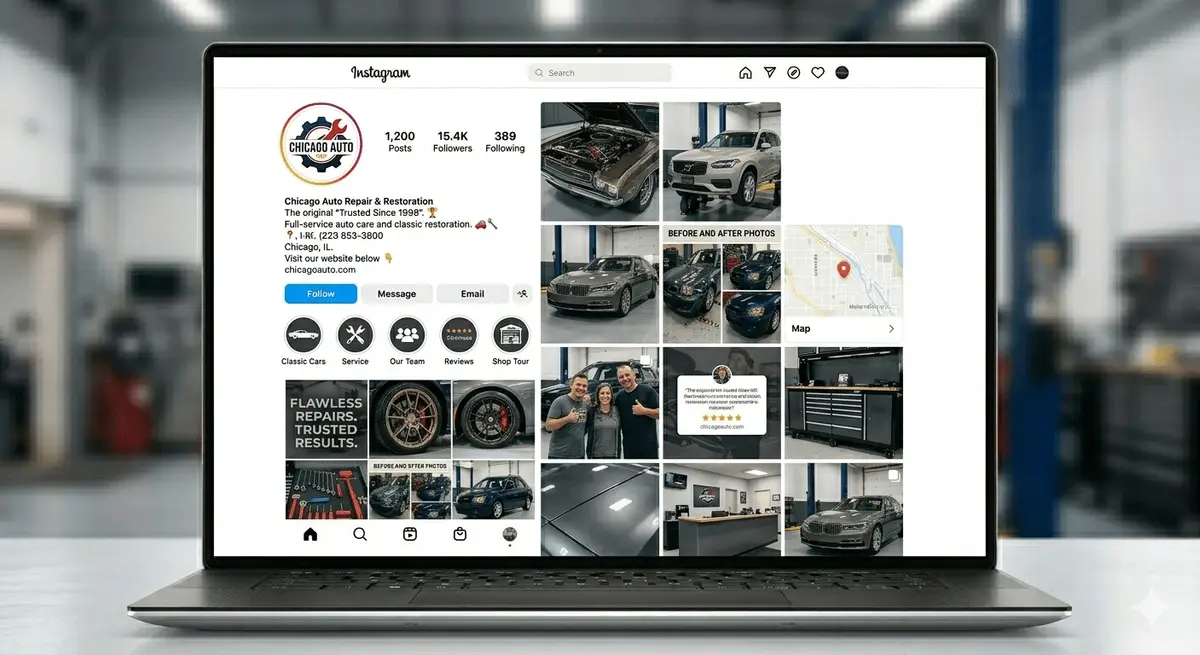
Instagram is where the visual content compounds. Reels reach further than grid posts right now and will for the foreseeable future. The four pillars all work as Reels. Cross-post from Facebook with one tap, do not duplicate effort.
Stories are the daily pulse. A quick photo of a car coming in, a tech at work, a finished job rolling out, the lobby coffee pot at 7 a.m. Stories disappear in 24 hours, which means the bar is lower. Post six or seven a week. They reinforce the "this shop is alive and operating" signal that the static feed cannot.
4. YouTube Shorts
YouTube Shorts is a free distribution channel for the tech-explanation pillar and the customer-win pillar. The same 30 to 60 second vertical clips you shot for Instagram Reels upload to Shorts in two taps. The reach is bonus, the SEO benefit (Shorts get indexed by Google and appear in local searches for the make and model) is the real prize.
Do not build a separate content engine for Shorts. Just upload what you already shot.
5. TikTok (optional, and only if you can shoot weekly)
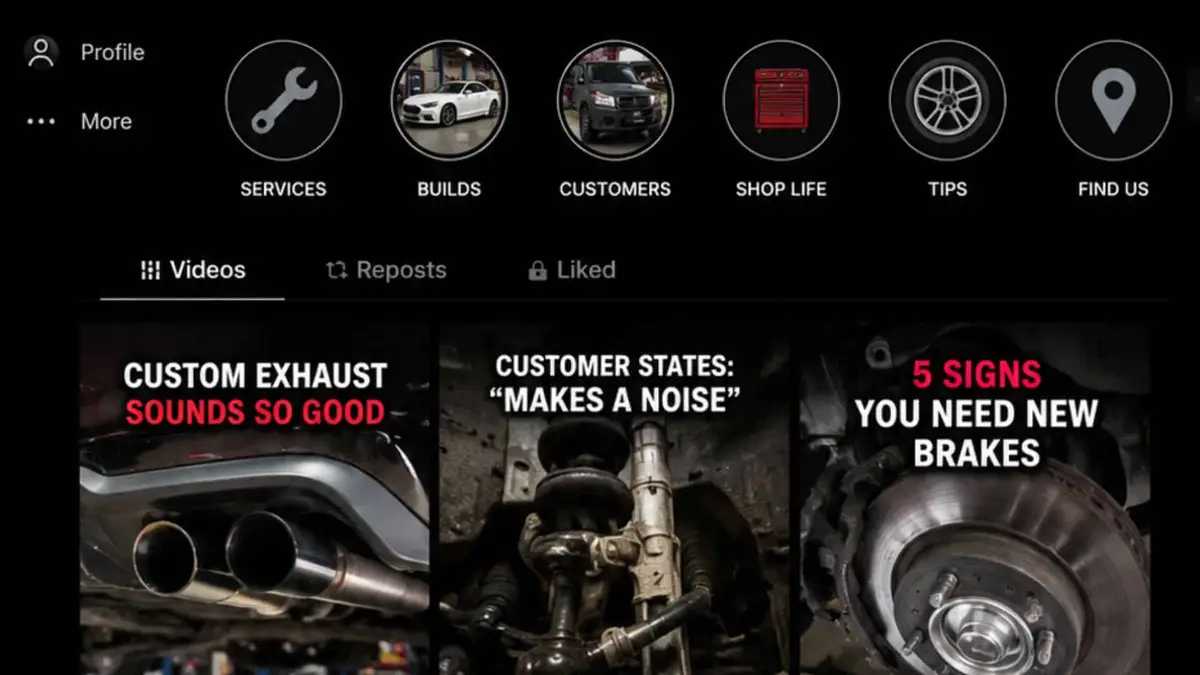
TikTok is a real platform for shops with a charismatic tech or owner who can hold the camera. If you do not have that person, skip it. The platform punishes inconsistency more than the others, and the demographic skews younger than your typical auto repair buyer. If you have the bandwidth, repurpose the same vertical content from the other platforms here. If you do not, focus your time on platforms 1 through 4 and revisit this in six months.
The order matters because of the fuel split. GBP is the foundation. Facebook is where buyers live. Instagram is where the content compounds. Shorts is free distribution. TikTok is upside. Build top-down and you will burn out. Build bottom-up and the engine produces.
Posting Frequency, the Way a Busy Shop Owner Can Actually Run It
Three to four posts per week, across all platforms combined, is the floor that works. Not per platform. Total. Distributed roughly like this:
Two Facebook posts per week (one before/after, one rotating pillar). Cross-post the visual one to Instagram.
One Instagram Reel per week (the tech explanation or the customer win).
One Google Business Profile post per week (a special, a service spotlight, a recent win).
Five to seven Instagram Stories per week (daily pulse, low effort, phone screenshots of life in the shop).
One YouTube Short per week (the Instagram Reel re-uploaded).
That is the entire calendar. Roughly 90 minutes per week of actual content creation if you batch it, plus the Stories which happen in real time on the shop floor. A service writer or front desk staffer can run most of it once the pillars are defined. The owner records the tech-explanation clips and shoots a customer testimonial at checkout when one walks in happy. That is the operating model.
Consistency beats virality. A shop that posts three solid pillar posts a week for 12 months in a row will out-trust a shop that posts daily for a month, disappears for four months, and comes back. The compounding signal is what builds the local brand. The single viral post does not.
The Math, the Way a Shop Owner Runs It

Now run the time-versus-return math on your own units.
Say your shop's average repair order is $450 with a 50 percent gross margin, so $225 gross profit per RO. The social presence is not generating cold leads. It is doing two things:
Reducing the percentage of buyers who bounce after checking your profile. Industry data on consumer research behavior in local service categories suggests a meaningful share of buyers, conservatively 10 to 20 percent, skip a business that looks inactive on social. If your shop fields 200 prospect interactions a month from all channels (website visits, GBP impressions, referrals, social), and even half of those buyers check social, recovering a 10 percent bounce rate is roughly 10 incremental booked customers.
Increasing the conversion rate of buyers who do check social and like what they see. A profile with active posts, real photos, and visible humans converts at a higher rate than one that looks abandoned. The mechanism is trust, the effect is measurable.
At 10 incremental bookings per month, at $225 gross profit per RO, that is roughly $2,250 in recovered gross profit per month, every month, from a social presence that costs you 90 minutes of attention per week to maintain. Run the math at your numbers. Be honest about your typical RO and your traffic. The case for posting three to four times a week is almost always overwhelming once the numbers are on paper.
The compounding part is the point. Every post you publish this week is still working for you in month 18 when a buyer checks your profile. Unlike paid ads, the content does not disappear when the budget runs out. It is equity, not fuel.
What to Do This Week, in Order
If you can give this one afternoon and one staff meeting, do it in this order:
1. Open your Google Business Profile. Scroll to Posts. If the most recent post is more than 30 days old, write one today. A current special, a recent repair, a holiday hours update. Anything that proves the listing is alive.
2. Open your Facebook business page. Note the date of the last post. If it is more than 14 days old, take three phone photos in your bay tomorrow and post one with a real caption. Do not overthink it.
3. Pick one tech on your crew who would not mind being on camera. Tell them you are going to record one 60 second clip per week of them explaining a real find from a real car. Schedule it for the same time every week so it becomes a habit, not an event.
4. At checkout tomorrow, ask one happy customer for a 20 second video testimonial. Just one. Vertical phone video. If they say yes, you have content for two weeks across three platforms.
5. Block 60 minutes on your calendar every Monday morning for the next six weeks to batch the week's posts. Same hour, same chair, same coffee. Make it a recurring appointment, not a someday-when-I-have-time task. Most shops fail at social because there is no scheduled slot for it. Fix that and the rest follows.
That is the diagnostic. It is unglamorous. It is also exactly why most shops never get traction on social, and exactly why the shops that do build a local trust layer the chains cannot match.
If you want a faster read on which part of your shop's digital trust layer is leaking (the GBP, the Facebook page, the review profile, or the photo gallery a prospect sees first), book a free Shop Audit and we will show you where the trust signals are misfiring. No admin access required. We look at what the rest of the internet sees and tell you what to fix first.